Operational Automation

Operational margin is an engineering problem

Inefficiency compounds quietly - in headcount, error rates, and margins.
We identify where automation creates return, and build it
Close-up of a woman with dark hair and freckles, wearing a white shirt, standing outdoors with green plants in the background.
Contact Kynera
Start with a conversation
A small wooden cabin on a grassy hill by a clear blue lake with scattered trees and rocks.
When to engage
When the cost of inaction exceeds the cost of change
Operational costs grow faster than output
Every unit of growth adds headcount at the same rate. Margin doesn't improve - it holds or shrinks.
No one knows what the process actually
Work happens. Results vary. No one can explain why - because the process was never defined.
Automation is implemented on broken foundations
Tools were deployed before the workflow was designed. The automation runs. The problem remains.
Critical operations depend on specific people
When someone leaves, the process leaves with them. There is no system - only institutional memory.
Process improvement never gets prioritized
Everyone knows the inefficiency exists. It stays because the business is too busy running to fix how it runs.
AI adoption stalled at the infrastructure layer
The initiative exists. The data isn't structured, the processes aren't mapped, and nothing is ready for AI.
How we work
From process reality to working automation
Process Intelligence
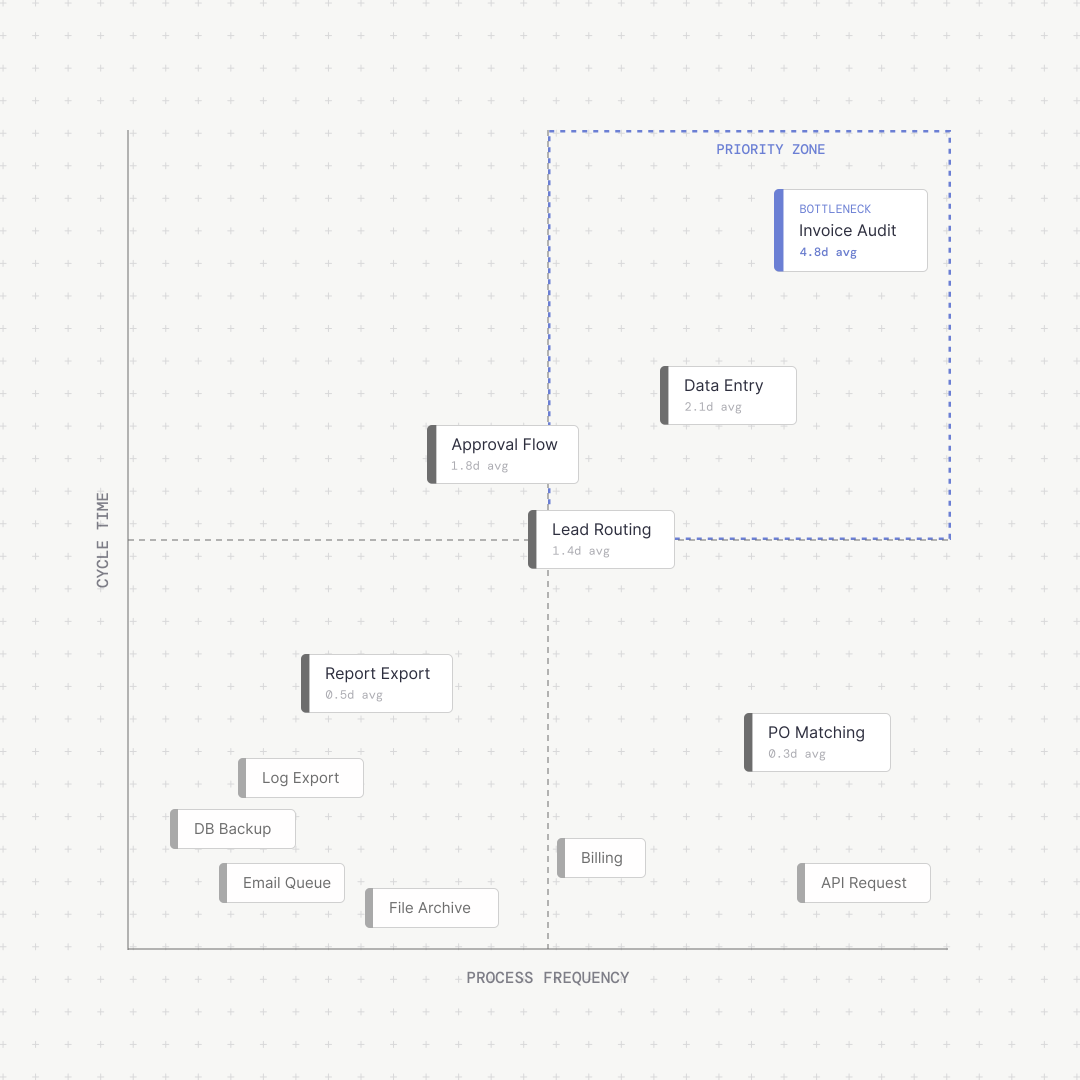
Process mining, direct observation, and structured interviews reveal where cycle time accumulates and handoffs break down.
Priority Architecture
A two-axis framework separates processes that drive margin from those that follow industry-standard logic. Resources go where return is highest.
Reengineering Before Automation
Automating a broken process produces a faster broken process. We redesign before we automate - then scale.
Our projects

Insights from active engagements

Unified Data
Data Arcihtecture
July 13, 2026
Why AI Projects Start With Data, Not the Tool
Companies buy AI expecting intelligence and get confident, wrong answers — then blame the tool and buy a better one. The tool was never the constraint; the data underneath it was. An AI system doesn't add intelligence to a business, it reads the data the business has already recorded about itself, and its ceiling is set by what that data can tell it. This piece defines what "ready" data actually means — four conditions we test before scoping any tool — and why getting the data right is the real first project, cheaper and more durable than the tool-swapping cycle it replaces.
Read article
Data Arcihtecture
Digital Transformation
July 13, 2026
Modernizing Data Warehouse: Why Fix, Migrate, and Rebuild Aren't the Same Project
Modernizing a data warehouse gets treated as one decision when it's actually three: fixing what's broken, moving to a platform that can run the current model, or redesigning a model that no longer matches how the business operates. Companies default to the middle option because it looks like progress and avoids the harder conversation about the third — and the cost of that default isn't the platform bill, it's the same slow answers a year later, on more expensive infrastructure. This piece lays out why that default wins so often, and the Fix–Migrate–Rebuild filter we run before recommending anything, so the spend closes the actual problem instead of relocating it.
Read article
Our knowledge base has helped hundreds with sustainable transformation
Explore all articles
Automation Services
Operational scope
Operational automation is not a single engagement - it is a sequence of decisions and implementations matched to where your business actually stands.
Discuss automation
01
Process Diagnostic & Prioritization
Structured operational audit. Identifies processes by impact tier, maps current state, and produces a prioritized automation roadmap.
02
Process Architecture & Modeling
For organizations without documented processes or with outdated models. Operational logic structured before automation begins.
03
Automation Design
End-to-end automation architecture for prioritized processes. Tool selection, logic design, integration mapping.
04
Automation Implementation
Deployment across targeted processes. Covers workflow automation, RPA, AI-assisted operations, and system integrations.
05
Custom Automation Development
For processes that standard tooling cannot handle - high complexity, legacy infrastructure, or unique operational logic.
06
Fractional Process Engagement
Ongoing operational partnership post-implementation. Process monitoring, iteration, and expansion as the business scales.
faq

In case you have some questions, we might already have an answer.

Contact us
How do you identify which processes to automate first?

Through process mining and operational audit - we map actual workflows, quantify time and cost per process, and prioritize by impact and feasibility.

Do you replace our existing operations software?

Rarely. We automate within and between your existing systems - replacing only what creates friction that can't be resolved otherwise.

What tools do you use for automation?

Depends on scale and complexity. Make, n8n, and Zapier for standard workflows. UiPath for enterprise RPA. Custom development when standard tooling becomes cost-inefficient.

How much can we realistically save?

Typical reduction in manual operational overhead: 40-60%. Exact figures depend on current state and scope.

Do our teams need technical skills to maintain automations?

Not necessarily. We build for maintainability and document everything. Where needed, we provide ongoing support.

How long before we see results?

First quick wins typically within 4-6 weeks. Full automation program: 3-6 months.

What departments do you typically work in?

Finance, HR, operations, procurement, logistics, and customer service - wherever manual processes create measurable cost or delay.

Is automation the same as AI?

No. Automation handles defined, repeatable processes. AI is applied where pattern recognition, prediction, or content understanding is required. We are clear about which is appropriate for each task.

Contact Us

Let's establish whether Kynera is the right fit for your organization

Email
hello@thekynera.com
Support
info@thekynera.com
Customer Service
Mon-Fri 10am-6pm
+1 (437) 476-6900
LinkedIn
@thekynera
Solution
By clicking the “Send message” button, you consent to the processing of your personal data.
Thank you! Your submission has been received!
Oops! Something went wrong while submitting the form.